
Garrick Club Punch
Spring has sprung, happy equinox

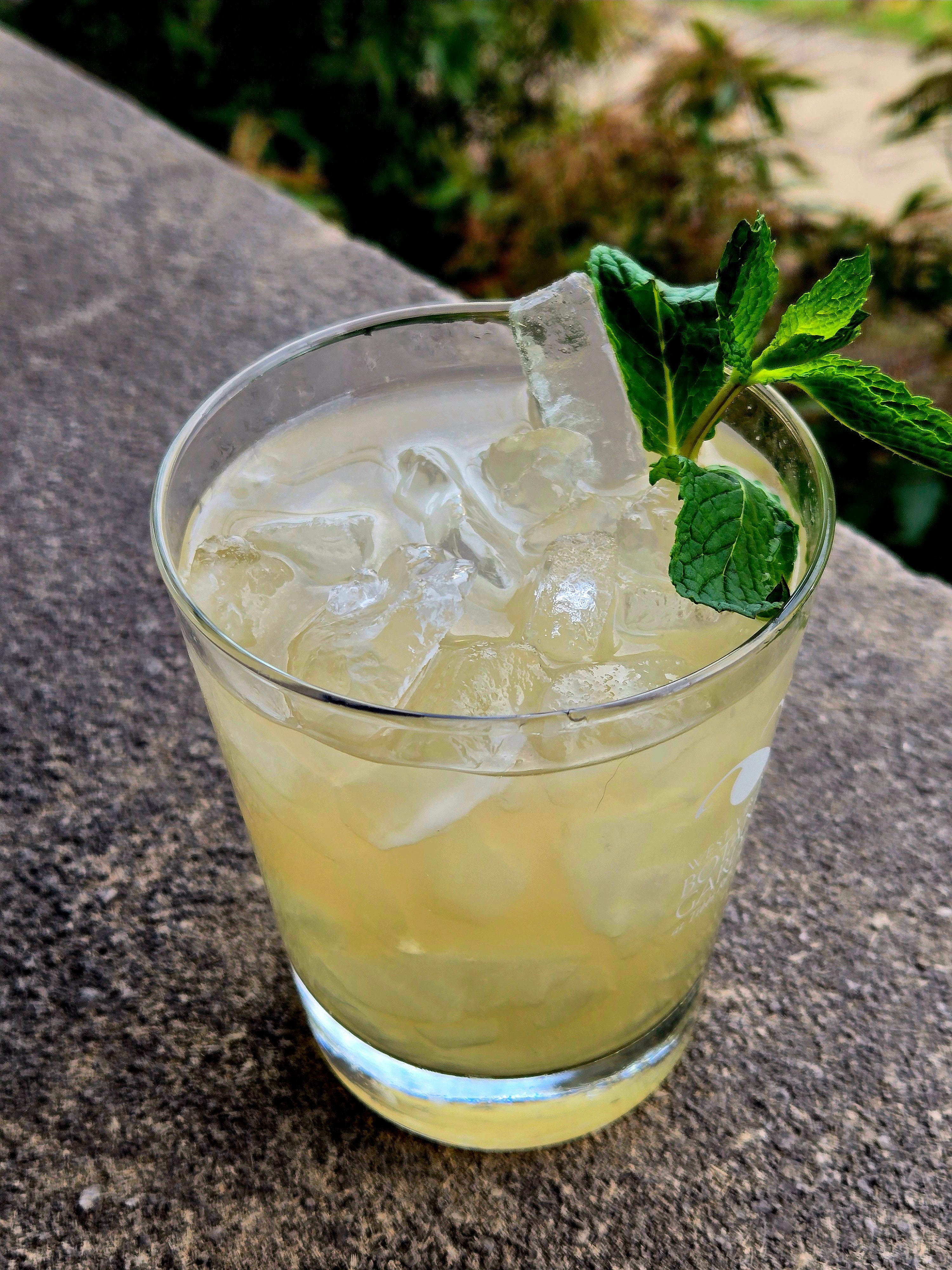
As I mentioned last week when we discussed The Tipperary, we throw a dinner party at my house on each equinox and solstice. The Vernal Equinox for 2026 is in the books. The times usually work out well because they fall adjacent to, but not on, typical holidays and other festivities. In a world where screens dominate our time, there is something of a lost art to the dinner party. Since moving back to Appalachia, we’ve been purposeful in having them periodically and inviting folks from ALL walks of life, sometimes simultaneously, others in curated mixtures. It is interesting, and frankly relieving, to hear and take part in conversations about things that aren’t academic or centered on current affairs. And, it’s an opportunity to set politics and the attendant doom scroll aside for a moment and enjoy the present. Were you here, you’d hear conversations about everything from fishing to weight-lifting, what people’s kids and pets are up to, and the last awesome vacation or camping trip they took.
We live in a house built in 1925 and have purposely kept it to look that way, complete with beams and a gramophone. There is no TV on our first floor. It’s a four-square with a kitchen, dining area, and great room or living room. We keep it that way to encourage (or gently “force”) folks to talk with each other. For me, it’s an extension of the way I grew up, where weekends were for visiting friends and family, sharing a meal, listening to music, and telling stories - instilling our narrative about the world. This environment is near-perfect for a punch, which, after all, was invented for gatherings and bonding over shared experiences and storytelling.
We here at the Appalachian Speakeasy are typically seasonal drinkers. And in the spring, that means the balance shifts toward gin. Gin’s botanicals and aromas suit it well to a season where pollen is thick, smells are bright and intense, and life is building momentum towards summer. Many folks don’t think of gin when they think of punch. Instead, the mind drifts to rum or whiskey, and frankly, often to something made with vodka in a trash can on a college campus. Our punch this week comes to us from David Wondrich, who has pretty much passed from mortal man to myth or legend when it comes to punch.
Wondrich writes about the Garrick Club Punch at Liquor.com (see link), but also covers it extensively in his book Punch: The Delights (and Dangers) of the Flowing Bowl. I highly recommend it if you are looking to build world-class, historical punches. I think it’s also worth noting that most punches are hastily built for a purpose, that purpose being to reach a level of “insight” and “introspection” as expeditiously as possible. In other words, they are boozy and bad and guide you into a stupor with dogged precision. This is a shame because punches were created to foster an evening that gathered momentum and kept imbibers socializing for quite a while.
Wondrich tells us the Garrick Club Punch came to be in London in the summer of 1835 when Humorist Theodore Hook went to the swanky Garrick Club in London. New Yorker Stephen Price was there and directed the bartender to make this punch. It is indeed refreshing, but by summer, my eyes turn to rum. The punch is essentially a batched version of a Gin Daisy, if we can define a daisy as a tall (lengthened) version of a gin sour that also includes added liqueur, cordial, or fruit-forward syrup. Remember our discussion about Valentine’s Day and The Birds and the Bees cocktail regarding Christians co-opting pagan holidays to avoid conflict and embarrassment, making conversion easier? Easter and the celebration of spring are definitely that. Let’s remember Ēostre and hope she brings renewal, new life, and rising light.
Let’s tip one.
Garrick Club Punch
Potion:
750 mL Gin
1 cup Fresh Lemon Juice (Fine-strained)
½ cup Sugar
4 Lemons
4 oz Maraschino Liqueur or Grand Marnier
24 oz Club Soda
Lemon and lime wheels, thinly sliced
Procedure:
For punches, we typically first make an oleo-saccharum, a citrus oil and sugar syrup. To do this, peel the citrus fruit, leaving as much of the bitter white pith behind. By far, the best way to do this is with a vegetable peeler. With the peels in the punch bowl or another container, add the sugar over them. Muddle the peels in the sugar for a bit to release the oils, and leave this mixture to rest for 30 minutes or so — getting back to this a bit late is fine. You don’t have to be super-precise on the finishing end. You’ll know when the sugar and oils have formed a rich citrus syrup (the peels will also have shrank and look kind of dried out). Sugar is hygroscopic, so once muddled, it’ll do the job of extracting the oils in the peels. Then, juice the lemons, fine-strain, and add the citrus juice to the mixture to dissolve any remaining sugar and incorporate the oils drawn out in the process. This technique is standard for most punches that call for citrus, so keep it in your back pocket for the future.
If you’re building the punch in the bowl, you’ll now add the gin and the liqueur of choice (or even a combination of them) and stir again to integrate the flavors. If using a combination, remember that the total amount should remain at 4 oz to preserve the balance in the punch (e.g., 2 oz Maraschino and 2 oz Grand Marnier). You’ll then add half the bowl full of ice. This will be a lot better if this ice is in one huge berg. It’ll melt more slowly, and the punch will mellow with time, which is often useful for particular types of guests. If you don’t have a single, huge berg, however, just add ice in the largest lumps you have until it’s half full. You might have to drink faster, but that never seems to be a problem at house parties. Finally, add the club soda to the bowl and start ladling.
If you’re building the punch to serve in a pitcher or other container where you won’t deploy a ladle, add the citrus juice to the container to dissolve the remaining sugar, then transfer the whole mixture to the intended serving vessel. As before, add the gin and liqueur to the mixture and give it another stir. Then, add the ice (as large as practical for you) in the same manner. Stir again briefly. When I serve punch this way, I like to keep cans of club soda cold and nearby. The guest then fills their cup with the desired amount of club soda and then the punch, in that order — the punch mixes with the soda better that way than the other way around. In doing so, the host also provides an extra way for a guest who realizes the need to slow down to control how much spirit they imbibe.
Glass: Punch cup, Rocks glass, or Wine glass
Options:
In terms of ingredients, you could use any gin you like to drink. The historical recipe calls for the most appropriate gin in order: Hollands or Genever, Old Tom, or London Dry. The distinction there is the balance of the malt backbone of the gin to the botanicals. Hollands or Genever is the most malt-forward, while London Dry is the most botanical-forward gin. I use Bols Genever above and prefer it for this, but your mileage may vary. A good compromise is an Old Tom gin. Hayman’s and Scofflaw make old toms that will work here. If I were using a London Dry, Tanqueray is my go-to. I also like Plymouth gin and use it frequently in cocktails of all types.
Either liqueur choice works well. Choose based on whether you prefer cherry or orange notes. The punch is like a gin daisy, batched and with some extra muscle to bear the slow dilution of the ice. I suspect this punch would work really well if you replace the lemons with limes and this set of liqueurs with something like Crème de Mûre. To me, lime works better with blackberries than does lemon. In that spec, it would resemble a Bramble. If you keep the lemon, I think Chambord (raspberries) or Crème de Fraise des Bois (strawberries) would be good. You just need to watch the balance, as some of these are sweeter and less alcoholic than those above. Note that this recipe is also not far from a Tom Collins, though usually without the liqueur.
Personally, I like the notion of that “punched-up” bramble above or the Creme de Fraise version. I think you’ll see those on these pages in the future. Let me know what you think below in the comments.
And, finally, in the aftermath of yesterdays vernal festivities, my good friend and constant companion on these occasions sent me the following song from The Magnetic Fields’ Stephin Merritt. It sums up our day and gin pretty much perfectly. Enjoy!
Love is Like a Bottle of Gin

It makes you blind, it does you in
It makes you think you're pretty tough
It makes you prone to crime and sin
It makes you say things off the cuff

It's very small and made of glass
And grossly over advertised
It turns a genius to an ass
And makes a fool think he is wise

It could make you regret your birth
Or turn cartwheels in your best suit
It costs a lot more than it's worth
And yet there is no substitute

They keep it on a higher shelf
The older and more pure it grows
It has no color in itself
But it can make you see rainbows

You can find it on the Bowery
Or you can find it at Elaine's
It makes your words more flowery
It makes the sun shine, makes it rain

You just get out what they put in
And they never put in enough
Love is like a bottle of gin
But a bottle of gin is not like love.

– Stephin Merritt of the The Magnetic Fields
This blog is, as ever, an opinionated take on drinks.